






Affiliate programs, referral programs and loyalty programs all reward people for sales, so they get mixed up a lot. The difference comes down to who you pay and what you pay them for.
In short, an affiliate program pays outside promoters, like bloggers and creators, a commission on sales from their audience. A referral program rewards your existing customers when a friend they told buys from you. A loyalty program rewards customers for buying from you again. Affiliate and referral programs bring in new customers, and a loyalty program keeps the customers you already have.
If you want a starting point before reading the rest:
- Affiliate program: best for stores in a niche where bloggers, YouTubers or creators already review products like yours.
- Referral program: best for products customers show to friends or buy as gifts, once you have a base of happy customers.
- Loyalty program: best for stores where customers reorder, like coffee, skincare or pet food.
- More than one at once: this works, but set some rules first so a single order doesn’t pay out twice.
We make WooCommerce plugins for each of these. Coupon Affiliates runs affiliate and refer-a-friend programs, Simple Points and Rewards runs loyalty points and points-based referrals, and Simple Store Credit can hold the rewards from both. We mention them where they fit and say where each one falls short. The rest of this guide applies to whatever tools you use.
Affiliate vs referral vs loyalty programs at a glance
| Affiliate program | Referral program | Loyalty program | |
|---|---|---|---|
| Who takes part | Bloggers, creators, publishers, sometimes customers | Your existing customers | Your existing customers |
| Who they reach | An audience of people who don’t know you yet | Friends, family and colleagues | Nobody new: the reward is for the customer’s own orders |
| Usual reward | Cash commission on each sale | A discount, store credit, points or cash, often for both people | Points or credit to spend with you |
| How sales are tracked | Referral link or personal coupon code | Referral link or personal code | The customer’s account |
| When it costs you | Only when a referred sale happens | Only when a friend buys | On every order, paid out when points are spent |
| Main goal | New customers | New customers | Repeat orders |
| Most of your work | Finding, approving and paying partners | Getting customers to share | Choosing a reward rate you can afford |
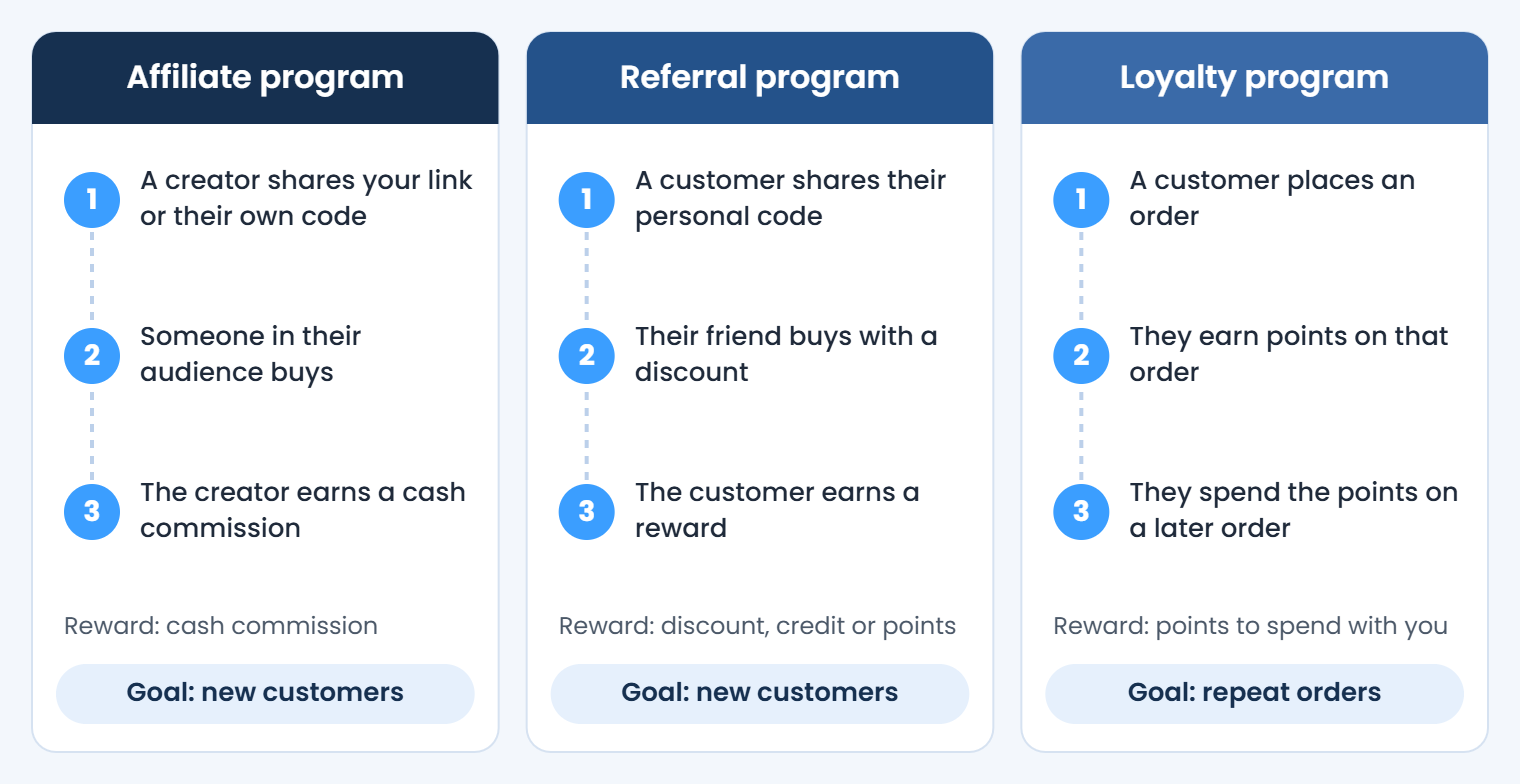
How an affiliate program works
An affiliate promotes your products to their own audience and earns a commission on the sales. Review bloggers, YouTubers, podcasters, newsletter writers, comparison sites and Instagram or TikTok creators are all common affiliates. Most of them haven’t bought from you before they join.
Each affiliate gets a referral link, a personal coupon code, or both. A link saves a cookie in the visitor’s browser, so the sale is credited to the affiliate if the visitor buys within the cookie period on the same device. A code is credited when the customer types it at checkout. Codes also pick up sales from podcasts, videos and conversations, where nobody clicks a link. Our guide to coupon affiliate marketing explains how code-based tracking works and when it beats links.
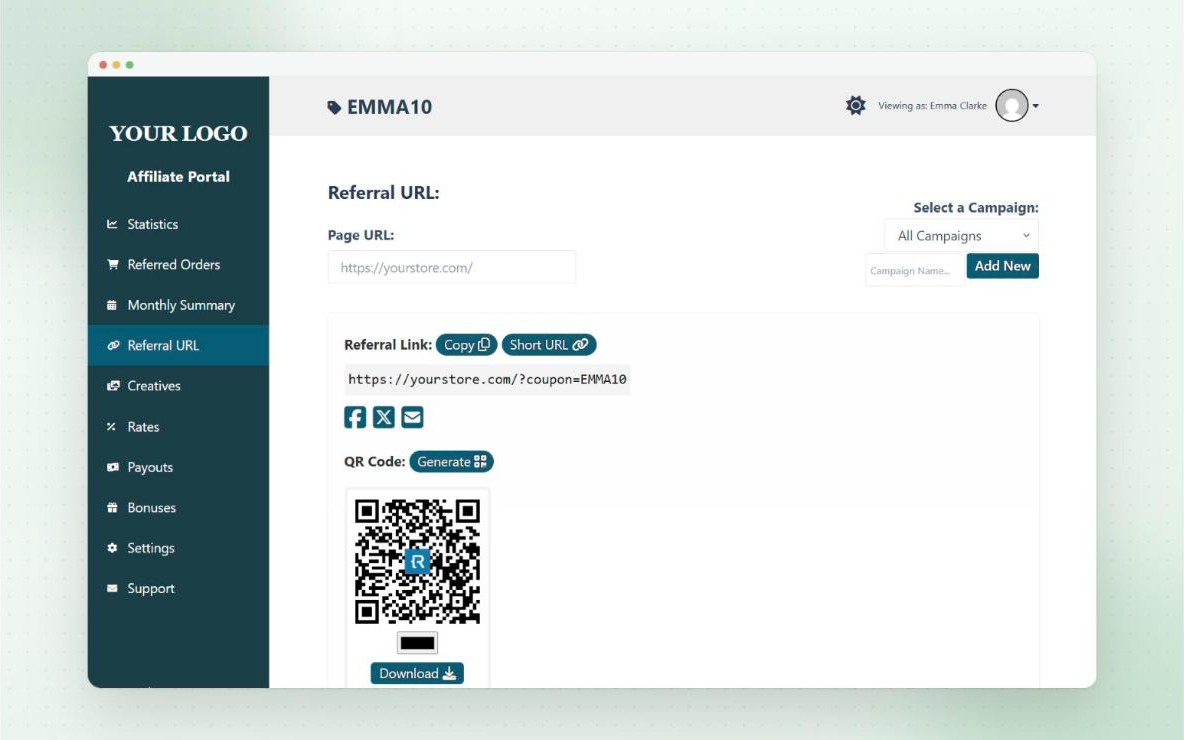
You pay a percentage of each referred sale, usually once a month and after the refund period has passed. If the affiliate’s code also gives a discount, remember to count both when you set the rate. A 10% discount plus 10% commission costs you about a fifth of the order.
An affiliate program fits when: people research products like yours before buying, there are already creators in your niche, and your margin can cover a commission on top of any discount. It also suits newer stores, because the customers come from the affiliate’s audience rather than your own.
Where it falls short: of the three, an affiliate program takes the most work to run. You have to find good partners, approve them, give them images and copy, and pay them. Some people sign up only to post the code on coupon sites, where it gets used by shoppers who were already at your checkout. Our guide to stopping coupon code leaks covers how to limit that. Affiliates who promote you in public also have to say they’re paid: in the US the FTC expects this, and in the UK the ASA has similar rules.
In WooCommerce: there are no affiliate features built in, so you need a plugin. Ours is Coupon Affiliates, an affiliate plugin for WooCommerce that gives each affiliate a coupon code, a referral link and their own dashboard. The free version tracks sales and commission, and you pay affiliates yourself. Paying them through PayPal, Stripe, Wise or store credit needs PRO, which costs $23.99 a month or $179.99 a year (25% off the first payment, with a 7-day trial). If most of your affiliates are creators, our page on influencer marketing for WooCommerce covers that setup. For other plugins, see our comparison of the best WooCommerce affiliate plugins.
How a customer referral program works
A referral program, often called refer a friend, asks your existing customers to recommend you to people they know. Each customer gets a personal code or link. When a friend uses it, the friend usually gets a discount and the customer gets a reward.
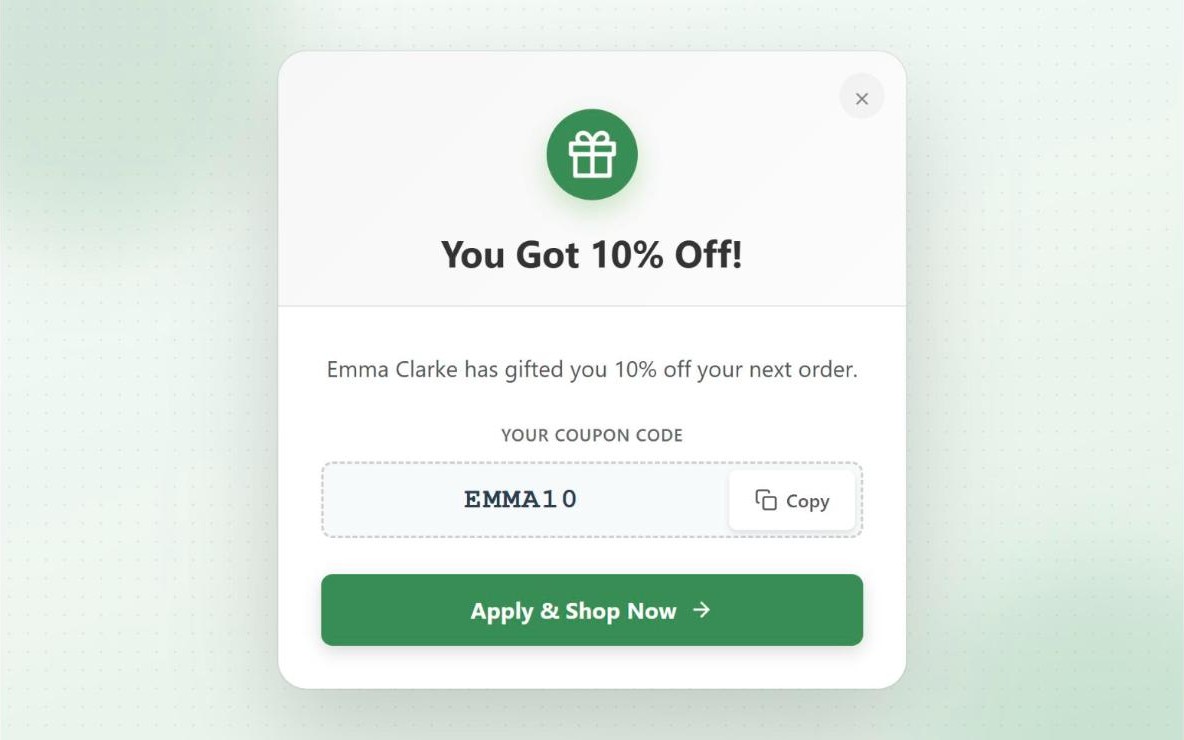
The main difference from an affiliate program is reach. A customer might tell five friends, while an affiliate might post to fifty thousand followers. The friends know the person recommending you, though, and that person has used your product. Rewards are smaller as a result, and they’re usually something to spend in your store: a discount code, store credit or points.
Referral rewards come in two forms. Some programs give a fixed bonus for each new customer, such as $10 of credit when a friend places a first order. Others pay a commission on every order that uses the customer’s code, which works more like an affiliate program run with customers.
When it makes sense: your products get seen, talked about or given as gifts (clothing, homeware, hobby supplies, subscriptions), and you already have customers who like what they bought. With only a handful of customers, there won’t be many people to share.
The downsides: each customer reaches very few people, so it grows slowly. Customers may try to use their own code, or create a second account to refer themselves, so turn on any options that block rewards on a customer’s own orders or limit codes to new customers. Most customers also forget the program exists unless you remind them, on the thank you page, in order emails and in their account.
Setting one up: both of our plugins can run one, in different ways. Coupon Affiliates gives each customer their own coupon code and pays commission on every order that uses it, as cash or store credit with PRO. Our page on running a customer referral program with coupon codes shows the setup. Simple Points and Rewards gives each customer a referral link and adds a fixed points bonus when the friend’s order is completed. That part is in the free version, and PRO adds a gift coupon for the friend. We compared both against five other options in our roundup of WooCommerce refer a friend plugins.
How a loyalty program works
A loyalty program rewards customers for buying from you again. In WooCommerce this usually means points: customers earn points on each order and swap them later for a discount, a voucher or a free product. Some stores use cashback instead, which pays part of each order back as store credit.
A loyalty program doesn’t bring new people to your store. It gives customers who have already bought a reason to come back to you instead of another shop. Every order earns a small reward, and the total is money you owe until customers spend their points. Most stores give back between 1% and 3% of each order. Our guide to creating a loyalty program in WooCommerce shows how to work out a rate your margin can cover.
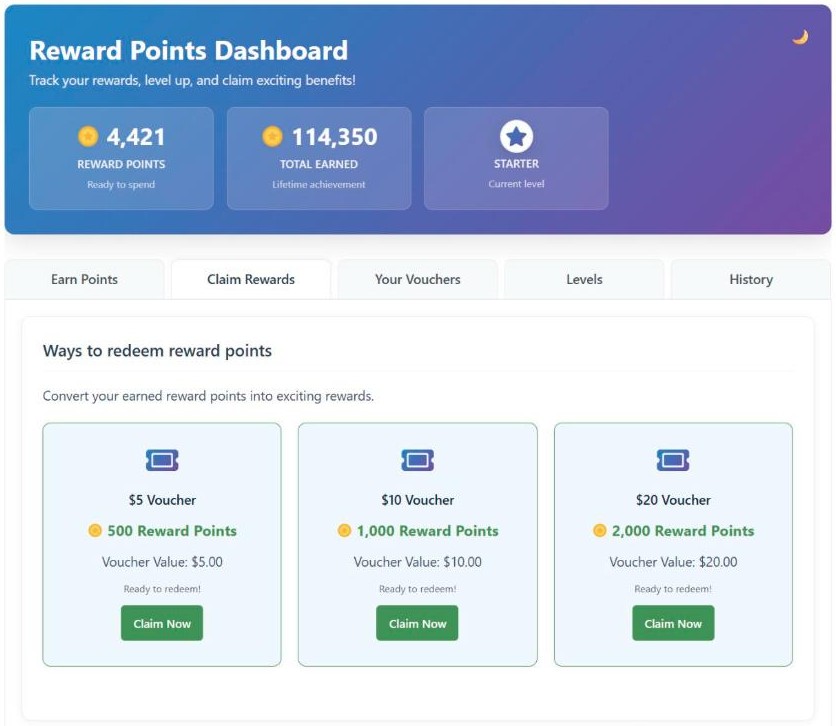
Who it suits: stores whose customers order every few weeks or months, such as shops selling coffee, skincare, supplements, pet food or printer ink. It does far less for products people buy once, like a mattress.
What to watch: unspent points add up, so keep an eye on the total. Customers need an account to collect points, which some guest shoppers won’t want. And customers have to know the program exists, so show points on product pages and at checkout, not only in the account area.
Plugins: WooCommerce has no points system either. The free version of Simple Points and Rewards includes points for spending, sign-up and referral bonuses, vouchers, a points discount at checkout and reports. PRO adds points expiry, more ways to earn and unlimited rewards, from $11.99 a month or $99.99 a year. It’s a young plugin, released in November 2025, so it has fewer reviews than older options.
Where brand ambassadors fit in
Brand ambassadors are somewhere between affiliates and referrers. They’re usually customers or fans who also have an audience, such as a running club organiser, a student with a large following or a local business owner. They promote you over months rather than in a single post.
A common setup gives each ambassador a personal discount code for their followers and a commission on the sales, plus perks like free products or early access to new ranges. In practice, an ambassador program is an affiliate program with a smaller, hand-picked group, so the same plugin can run it. Our page on brand ambassador programs for WooCommerce goes through it in more detail.
Which one should you start with?
Start with one. Each program needs some setup and some attention afterwards, and you can add a second when the first is running well. These questions help you choose:
- How often do customers reorder? If most come back within a few months, a loyalty program will make a difference. If they buy once, it won’t.
- Do customers show your products to other people? Things people wear, use in front of others or give as presents get talked about, which suits a referral program.
- Is anyone already writing or making videos about products like yours? If so, an affiliate program gives them a reason to include you.
- How many customers do you have? Referral and loyalty programs only work with existing customers. A new store gets more from an affiliate program, because the reach comes from other people’s audiences.
- How much margin is left after a discount? Affiliate commissions cost the most per order. Loyalty rewards cost the least per order, but every order earns them.
Some examples of how that works out:
- A new store selling hiking gear: an affiliate program with outdoor bloggers and YouTubers, each with their own code.
- An established coffee subscription: a loyalty program first, then a referral program that gives the friend a free bag.
- A clothing brand with an Instagram following: a small ambassador or influencer program.
- A furniture store where most people buy once: a referral program that pays the customer in cash and gives the friend a discount, since store credit or points would rarely get spent.
Running more than one program at once
Plenty of stores run two or all three. The programs can work side by side, but one order can trigger more than one reward, so decide the rules before you turn on the second.
Here’s an example. A new customer uses an affiliate’s 10% coupon on an order of $100. Your affiliate commission is 10% and your loyalty program gives back 3%:
- Coupon discount: $10.00
- Affiliate commission: $9.00, worked out on the $90 the customer paid
- Loyalty points: worth $2.70 when the customer spends them
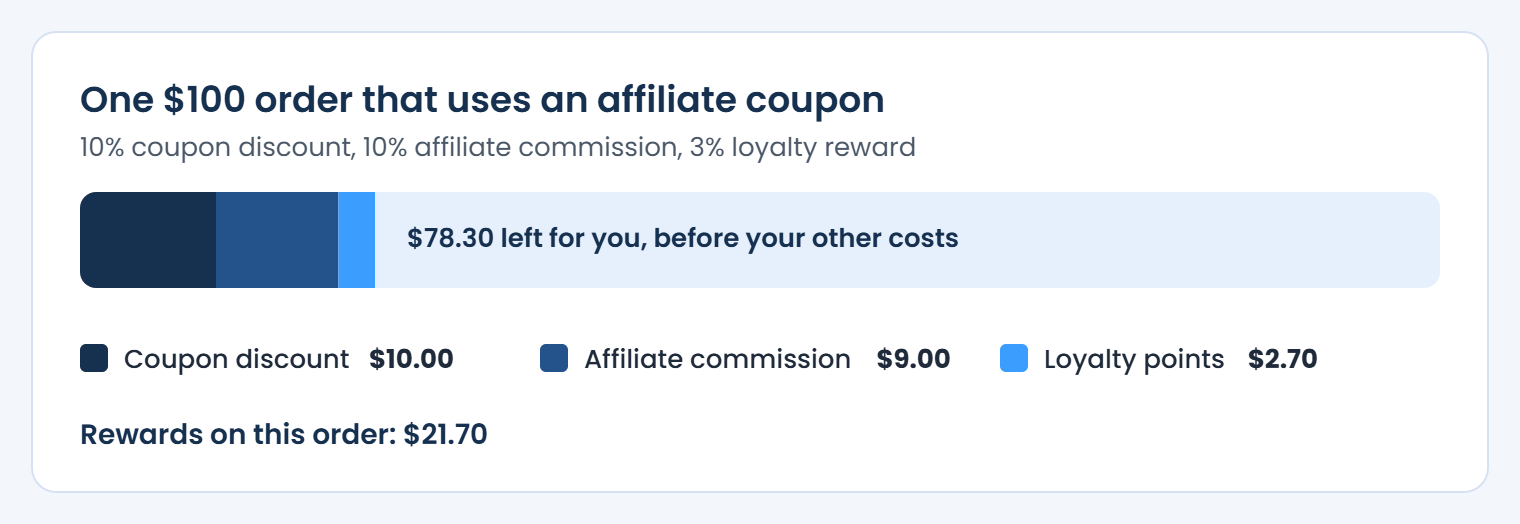
That’s $21.70 in rewards on a $100 order, before payment fees and shipping. If the customer had also arrived through a friend’s referral link, the same order could pay a referral bonus as well.
Coupon Affiliates and Simple Points and Rewards don’t check for each other (we looked at the code of the October 2026 versions), so their settings decide what happens on an order that uses both. These are the ones to look at:
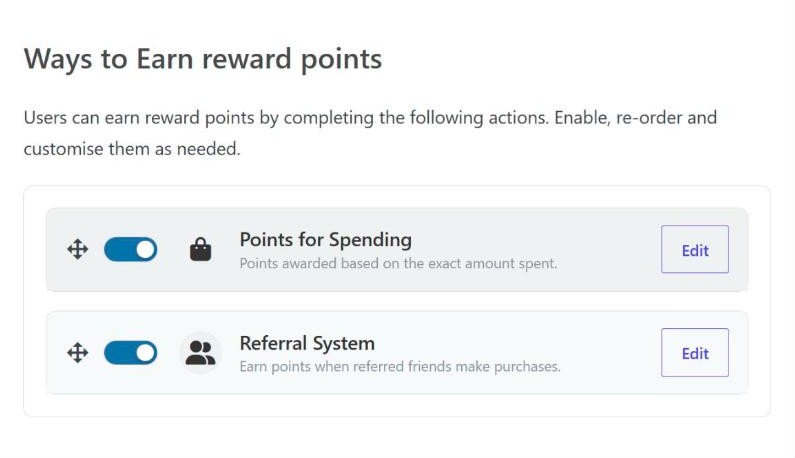
- Use one referral system. The Referral System in Simple Points and Rewards is switched on by default. If Coupon Affiliates runs your refer-a-friend program, turn it off under Ways to Earn, so customers don’t get two referral links and one friend can’t earn two rewards. If you’d rather reward referrals with points, do it the other way round.
- Points on orders with a coupon. By default, Simple Points and Rewards gives points on the subtotal after discounts, so an affiliate coupon lowers the points earned on that order rather than stopping them.
- Commission on points spent. When a customer spends points at checkout, the discount is added to the order as a negative fee. By default, Coupon Affiliates takes negative fees and store credit off the order total before it works out commission, so affiliates don’t earn on the part paid with points. The setting is Include “custom discounts” in % commission calculations, under the advanced calculation settings.
- Coupons used together. Points vouchers in Simple Points and Rewards are WooCommerce coupons. If you don’t want them used with an affiliate code, tick Individual use only on your affiliate coupons.
Before you launch, place one test order that uses an affiliate code and spends some points, then check the commission and the points on that order.
Customers find it easier when every reward goes into one balance. The free version of Simple Store Credit gives each customer a store credit balance. Coupon Affiliates PRO can pay affiliate and referral commission into it, and Simple Points and Rewards can turn points into credit. Customers then see one balance in their account. Our guide to store credit, gift cards and coupons explains how credit differs from a discount code.
FAQ
What is the difference between an affiliate program and a referral program?
An affiliate program pays people outside your business, such as bloggers and creators, a commission for sales from their audience. A referral program rewards your own customers for recommending you to people they know. Both use personal links or codes, so the tools overlap, but affiliates reach more people and usually expect cash.
Is a referral program the same as a loyalty program?
No. A referral program rewards customers for bringing in someone new. A loyalty program rewards customers for their own repeat orders. Many loyalty plugins include a referral feature, which is why the two get confused.
Can a customer also be an affiliate?
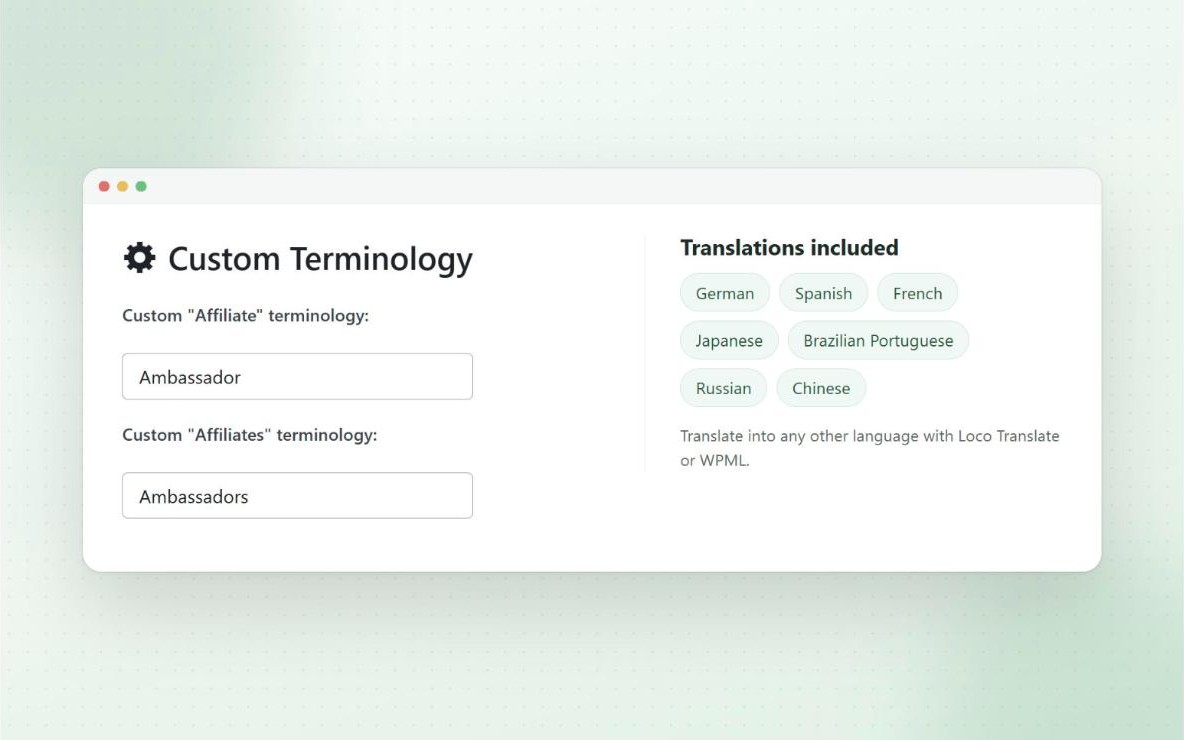
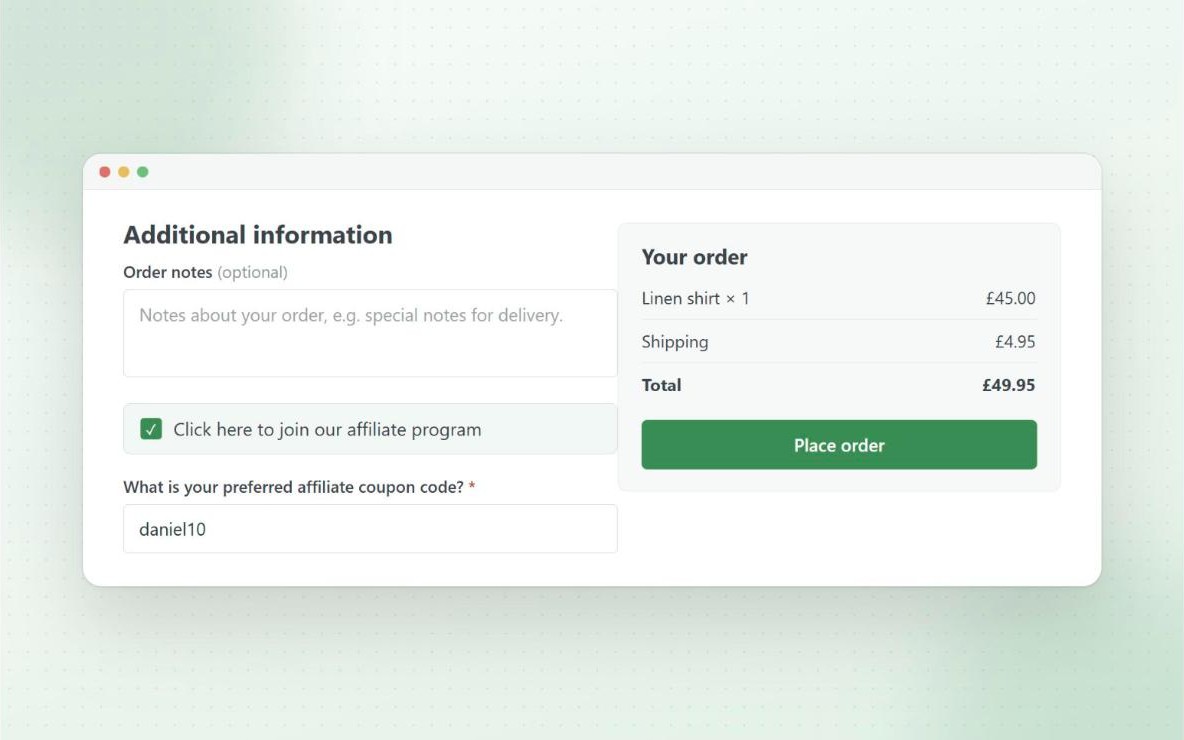
Yes. Many stores invite their best customers into the affiliate program and pay them commission. In Coupon Affiliates you can rename “affiliate” to “refer a friend” or “ambassador” so the program reads like a customer reward, and with PRO customers can join from a checkbox at checkout.
Which program costs the least to run?
Per order, a loyalty program usually costs the least, at 1% to 3% of each order. But it pays out on every order, while affiliate and referral programs only pay when they bring in a sale. Affiliate programs also take the most of your time.
Does WooCommerce have any of these built in?
No. WooCommerce has coupons, but nothing that tracks affiliates, referrals or points. All three need a plugin, and most of the main plugins have a free version you can try first.
Can one plugin run all three?
Not ours. Coupon Affiliates covers affiliate and referral programs, and Simple Points and Rewards covers loyalty points and points-based referrals. Some loyalty plugins include referrals, and most affiliate plugins can be used for referrals too. If you use two plugins, check the settings in the section on running more than one program.
The short version
Pay affiliates to reach people who don’t know you, reward customers for bringing in friends, and use loyalty points to bring customers back. Pick the one that matches how your customers buy, get it working, then add another. If you run more than one, decide which program rewards which order before you switch the second one on.

Our plugins
Grow your WooCommerce store
Affiliates, loyalty points, store credit, tax exemption and more – trusted on 248,000+ sites.
Comments