






Your conversion rate is the share of visits that end in an order. If 2,000 people visit your store in a month and 40 of them buy, your conversion rate is 2%. Raising it is usually cheaper than buying more traffic, because every change helps the visitors you already have.
Most of the fixes below come from one question: why do people leave? Baymard Institute’s research puts the average cart abandonment rate at around 70%, and its survey of shoppers gives the most common reasons. We’ve ordered this list roughly by those reasons, starting with the checkout, where a buyer who’s already decided can still be lost.
First, measure where people drop out
WooCommerce Analytics shows your orders and revenue, but not how many visitors you had, so it can’t give you a conversion rate on its own. Two free tools fill the gap:
- Google Analytics for WooCommerce, the official plugin, sends your store’s ecommerce events to Google Analytics 4. From there you can see how many visitors view a product, add to cart, start the checkout and buy, and where the biggest drop is.
- Order Attribution, built into WooCommerce, records where each order came from, such as Google, an email campaign or a social post, and on what device. If it isn’t already on, turn it on under WooCommerce › Settings › Advanced › Features.
There’s no single “good” conversion rate. It varies too much by product, price and traffic source. Compare your store against its own numbers from month to month, and make one change at a time so you can tell what worked. If bots are placing fake orders or creating fake accounts, deal with that first, because they skew every number here. Our guide to stopping WooCommerce spam orders covers how.
1. Show the full price before the checkout
Extra costs such as shipping, tax and fees are the most common reason shoppers abandon a checkout, named by 40% of those who left in Baymard’s survey. The percentages below are all shares of shoppers who abandoned a checkout. Shipping is usually the culprit, especially when it only appears on the last step.
- Turn on the shipping calculator on the cart page, under WooCommerce › Settings › Shipping › Shipping settings. If you use the Cart block, the calculator is a setting on the block itself.
- Put your delivery prices, or your free delivery threshold, on product pages and in the site header.
- If you offer free delivery over a set amount, show customers how far they are from it in the cart. It also tends to raise the average order value.
2. Let people check out without an account
Being made to create an account is the reason 18% gave for leaving. Under WooCommerce › Settings › Accounts & Privacy, tick Enable guest checkout. You can still offer to create one during the checkout, or after the order, for customers who want to track it.
3. Cut the checkout down
A long or complicated checkout accounts for 17% of abandonments. Stores created since WooCommerce 8.3 use the Checkout block by default, which is shorter than the old checkout and lets you switch fields such as company name, the second address line and phone number to optional or hidden. If you’re still on the older shortcode checkout, it’s worth testing the block version.
Then place a test order yourself, on your phone, and count the fields. Anything you don’t need to fulfil the order is a reason to leave.
4. Offer the payment methods people expect
Not enough payment methods accounts for 9% of abandonments, and declined cards for another 10%. Apple Pay and Google Pay help with both, because customers don’t type in a card number at all. WooPayments and the Stripe plugin can both add them as express buttons at the top of the checkout. PayPal and a “buy now, pay later” option such as Klarna are worth adding if your customers ask for them, particularly on higher-priced products.
5. Give people reasons to trust you
19% of shoppers who abandon do so because they don’t trust the site with their card details, and 13% because the returns policy isn’t good enough. A new or small store has to earn trust that a big brand gets for free:
- Link to a clear returns policy from product pages and the checkout, and say how long refunds take.
- Show a real business name, address, email address and phone number.
- Turn on product reviews, and the “verified owner” label under WooCommerce › Settings › Products, so shoppers can see the reviews come from real customers.
- Ask for reviews after delivery. Most happy customers never think to leave one unless asked.
6. Answer every question on the product page
Online shoppers can’t pick the product up, so the page has to do that job. Use several photos from different angles, including one that shows the size. Write descriptions that cover what the product is made of, how it fits or works, and how to look after it. And say when it will arrive: slow delivery is behind 20% of abandonments, so a clear delivery estimate on the product page removes a common reason to hesitate.
Your customer service inbox is the best guide to what’s missing. If the same question keeps coming up, the answer belongs on the product page.
7. Make the site fast, and keep it working
Website errors and crashes account for 17% of abandonments. A plugin update that breaks the checkout can quietly cost you orders for days, so place a test order after every update, not just after big changes.
For speed, Google’s Core Web Vitals are a sensible target: the main content should load within 2.5 seconds, the page should respond to a tap or click within 200 milliseconds, and the layout shouldn’t jump around as it loads. You can test any page for free with PageSpeed Insights. On most stores, the biggest gains come from compressing images, using good hosting and removing plugins you no longer use.
8. Make search find things
Visitors who use search usually know what they want, which makes them some of your most likely buyers. WooCommerce’s built-in search is basic: it doesn’t show suggestions as you type, and a small typo can return nothing. A search plugin such as FiboSearch adds live suggestions with product images and prices, and can search by SKU.
It’s also worth checking what people search for in Google Analytics. Searches that return no results show you gaps in your range, or products that need a better name.
9. Follow up on abandoned carts
Some shoppers leave because they got distracted, not because they changed their mind. A short reminder email with a link back to their cart brings some of them back. WooCommerce doesn’t send these on its own, but free plugins such as Cart Abandonment Recovery for WooCommerce can.
Keep it to one or two emails, and don’t add a discount to the first one, or regular customers will learn to leave their cart and wait for a code. These emails go to people who haven’t finished buying, so check the plugin’s settings against your privacy policy and your local marketing rules.
10. Use discounts carefully, and honestly
A genuine time-limited sale is a good reason to buy now. A fake one is a risk: in the UK, falsely claiming an offer is only available for a limited time is one of the practices banned outright under the Digital Markets, Competition and Consumers Act 2024, and a countdown timer that resets on every visit is exactly that. Give real sales a real end date, and stick to it.
Watch where your discount codes end up, too. A code meant for your email list that turns up on a coupon site or a browser extension will get used by people who would have paid full price anyway. Our guide to stopping coupon codes leaking shows how to limit who can use each code.
11. Give customers a reason to come back
Returning customers already know and trust your store, so they tend to convert much more readily than first-time visitors. A few ways to make that more likely:
- A loyalty programme. Showing “earn 50 points with this purchase” on the product page gives a small extra reason to buy, and the points give customers a reason to return. Our Simple Points and Rewards plugin does this, and there’s a free version.
- Store credit for refunds and returns. Offering store credit as a refund option keeps the money with your store, and the customer has a reason to come back and spend it. Our guide to store credit, gift cards and coupons explains when each one makes sense.
- Notice when regular customers go quiet. Someone who used to order every month and hasn’t for three is worth a personal email. Customer reports make these customers easy to find.
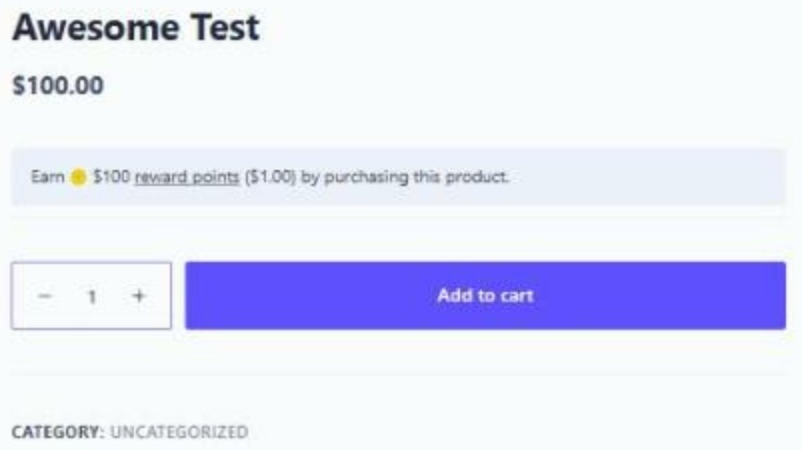
A points message on the product page, from Simple Points and Rewards.
Where to start
If you only have an afternoon, set up Google Analytics for WooCommerce, place a test order on your phone, and fix whatever annoyed you along the way. Surprise delivery costs, forced account creation and a long checkout are the most common problems, and all three can be fixed in WooCommerce’s settings without any new plugins.
After that, work down the list one change at a time, and check your numbers a few weeks after each one. Small stores don’t get enough traffic for formal A/B tests, but a clear before and after is usually enough to tell whether a change helped.

Our plugins
Grow your WooCommerce store
Affiliates, loyalty points, store credit, tax exemption and more – trusted on 248,000+ sites.

Comments